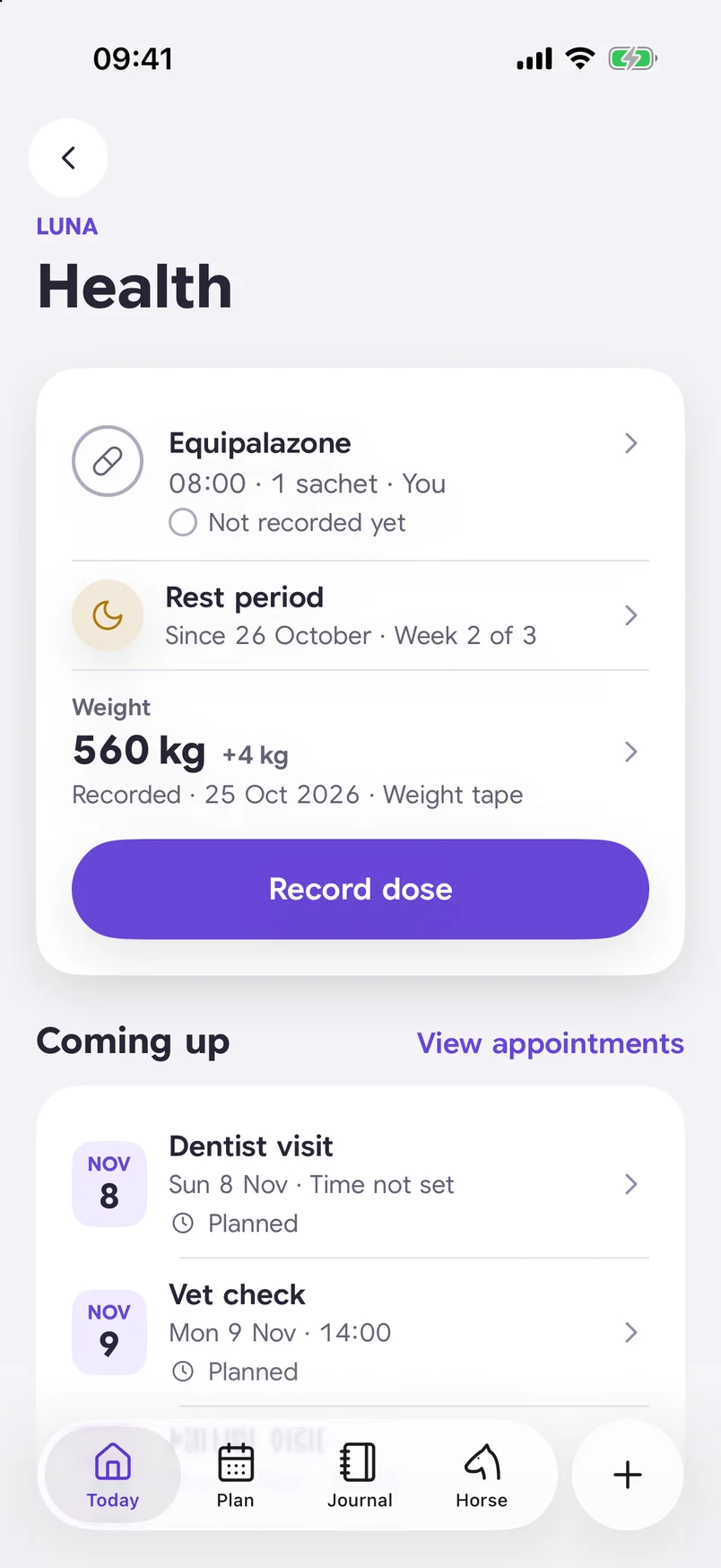
Medication records: instructions and doses
Keep the original instructions alongside the dose record. Make it clear what was prescribed, what was planned, what was given and what remains uncertain.
In brief
- Copy the current prescription or dispensing instructions exactly and keep the original.
- Record each dose’s outcome separately from its planned date and time.
- Keep changes with their source and date, and retain the instructions used for earlier doses.
On this page
Start with the original instructions
Identify the horse and keep the prescription, dispensing label or written instructions where the person giving the medicine can find them. Ask your vet about anything unclear or inconsistent.
- Medicine name and strength, as supplied.
- Prescribed amount, unit and how the medicine is to be given.
- Timing, frequency and any start or end date stated in the instructions.
- Additional instructions, the prescriber’s name and contact details.
- The source document and its date, with the date you copied the instructions.
Leave unspecified details unresolved until you have checked them. Do not fill them with a default dose, interval or course length.
Keep the plan separate from the outcome
A planned dose records the arrangement. Give each dose its own outcome: Given, Not given or Not sure. A blank outcome means that no outcome has been recorded.
A missing entry does not establish whether the medicine was given. Check with the person responsible and keep any remaining uncertainty visible.
If you are unsure how much was given, record that uncertainty rather than entering the prescribed amount as an observed fact.
Record when it happened and who was involved
For a dose recorded as given, keep the actual date and time, the amount and unit, and the person who gave it. Record when the entry was made and who made it separately.
If the administration time is unknown, say so. The time someone writes the entry does not establish when the medicine was given.
Identify information supplied by another carer. Keep their account distinct from something you observed yourself.
Keep changes traceable
When your vet changes the instructions, retain the updated source, who gave the change and when. Record when the new instructions apply, if specified.
Keep earlier doses associated with the instructions used at the time. A new prescription does not change what was previously recorded as given.
Make the current instructions identifiable for everyone involved in giving the medicine.
Retain the original and official records
Keep original prescriptions, labels, veterinary reports and any required passport or competition records. Your personal summary does not replace them.
The UK Veterinary Medicines Directorate describes separate requirements for medicine records and horse passports. This guide does not establish which legal requirements apply to your horse or provide a complete statutory record.